 I guess I shouldn’t be so surprised that yet another pastor and leader within the Seventh-day Adventist Church has published an article supporting theistic evolution over vast spans of time on this Earth. Elder Scott A. LeMert, retired pastor at the Sunnyside SDA Church in Portland Orgeon, published an article yesterday in Spectrum Magazine entitled, “DEEP TIME: The Forbidden Conversation“. He presents evidence that he believes definitely undermines the current and historical SDA position of a literal Creation Week within recent history (some 6,000 years ago). As usual, the arguments presented are not new. They are decades old and do not overcome the abundant evidence that life on this planet arrived recently and that the geologic column and fossil records are records of a worldwide rapid catastrophe consistent with the Noachian account detailed in the Bible. So, let’s go through what LeMert finds so convincing.
Table of Contents
- 1 Egyptian Pyramids Surviving the Flood:
- 2 Greenland Ice Sheet:
- 3 The Ice Ages:
- 4 The Scablands:
- 5 Carbon 14 Dating:
- 6 DNA Detrimental Mutation Rates (also a Clock):
- 7 Two Coordinated Mutations Require > 100 Million Years:
- 8 Ancient Archeological Sites:
- 9 The Orion Nebula:
- 10 An Evil God and the Credibility of His Word:
Egyptian Pyramids Surviving the Flood:
 “How do you get around the pyramids having survived the flood? The wall engravings and tablets they left behind recorded their history in time by using things like total solar eclipses, dates easily verifiable today.”
As it turns out, the oldest solar eclipse linked to ancient Egypt is an annular eclipse that occurred on October 30, 1207 BC. Researchers identified this date by analyzing a biblical text from the Book of Joshua (“the sun stood still”) combined with Egyptian records of Pharaoh Merneptah’s campaign in Canaan (University of Cambridge & The Royal Astronomical Society journal Astronomy & Geophysics, October 2017). This is right in line with the Biblical account. There’s nothing here that undermines a recent or literal Creation week described in Genesis.
Clearly, the Egyptian pyramids weren’t built until after the Flood. They didn’t survive the Flood because they weren’t there during the Flood.
Greenland Ice Sheet:
 “The Greenland Ice Sheet has been core-drilled, and the ice exhibits at least 100,000 years’ worth of seasonal pollen layers.”
The Greenland Ice Sheet is not dated via “pollen layers”, but by actually counting the layers of ice. And, when these layers become so thinned out that they cannot be visually distinguished, they are counted with the use of “chemical signatures”, such as with the use of oxygen isotopes. The problem here is that this counting isn’t reliable since these chemical signatures within the ice can move over time and form false layers (Link). Another key problem with this argument is that Greenland was recently green.
Greenland was once Green:
 Greenland, in particular, has not always been covered in ice. It was once truly green – all over. In fact, within the Hypsithermal period or “warm age” (which, according to mainstream thinking, is said to have lasted some 7,000 years, ending only some 2,500 years ago), the northernmost parts of the planet were very much warmer than they are today. Studies on sedimentary cores carried out in the North Atlantic between Hudson Strait and Cape Hatteras indicate ocean temperatures of 18°C (verses about 8°C today in this region) during the height of this period of time between 4,000 to 6,000 years ago (again, according to mainstream thinking). Given that the Greenland ice sheet is currently melting at a fairly rapid rate, it’s rather hard to believe that it existed at all during the very warm Hypsithermal period – a period when millions of mammoths along with many other types of warmer weather plants and animals happily lived within the Arctic Circle all around the globe along the very same latitudes as Greenland (Link). A 1995 study of mammoth remains located on Wrangel Island (on the border of the East-Siberian and Chukchi Seas) shows, according to radiocarbon dating, that mammoths persisted on this island till about 1,700 B.C. (Vartanyan S.L, et. al., 1995). And yet, somehow, Greenland was still covered with thick sheets of ice that are over 400,000 years old (Link), when everything around it was warm and balmy? supporting huge herds of animals and lush forests with fruit bearing trees and abundant grasslands? This seems quite unlikely to me…
More at: Ancient Ice
The Ice Ages:
 “The North Dakota State Geological Survey labels these glacial recessional terminal moraines—accumulations of rocks and other glacial sediment deposited at the farthest edge of a glacier’s advancement by the “bulldozer” effect of ice pushing debris. These moraines stretch as far as the eye can see—the southern limit of the last ice age that ended 10-12,000 years ago. Inside the walls of our church occasional discussions could be heard on their origins: “Were these landforms glacially caused or remnants of Noah’s flood?” And since the Bible didn’t talk about glaciers, it was the flood, 6,000 years ago, period. End of discussion!”

I don’t know any prominent creation scientist who believes in a literal Creation Week who doesn’t believe in the ice ages or that they happened after Noah’s Flood. Before the Flood, there were no ice caps in the polar regions. The entire Earth was uniform in temperature. Also, according to the Bible and the writings of Mrs. White, before the biblical Flood, there were no great oceans, mountain ranges, or deserts (Link). The Earth was watered by underground springs and fountains driven by four great rivers (Genesis 2:10). The ground was watered by dew each morning, so there was no need for rain. In fact, it never rained. That is why Genesis described the inhabitants of the pre-Flood world as laughing at Noah when he said that water would soon fall from the sky and flood the world. Such a thing was a scientific impossibility in that day – that was until all of the fountains of the great deep were broken up within a single day (Genesis 7:11).
Right after the Flood, of course, the world would have been a rather warm place because of all the energy released during the catastrophe. There were no ice caps on the poles since even within the Arctic Circle, it was warm and lush all around the world, harboring enormous forests and fruit-bearing trees as well as vast grasslands and millions of animals – including large mammoths, deer, bison, etc. This situation lasted for hundreds of years after the Flood. However, when the first ice age came, it came so suddenly that it trapped, froze, and preserved millions of these trees and animals all around the Arctic Circle. This means, of course, that Greenland was also once very green – in very recent history (Link).
 The ice ages started suddenly and progressed rapidly a few hundred years after Noah’s Flood (Link), until now, what is New York City was covered by more than 2,000 feet of ice. In fact, this created a very different environment in a relatively thin belt around the middle of the Earth compared to what exists today. During the time of Abraham, Canaan and the regions of the Middle East looked very different from how these places look today. Today, these places are basically desert environments. Back then, they truly were lands “flowing with milk and honey” (Exodus 3:8). They were rich, verdant gardens. Even the Sahara Desert was rich and verdant at that time, covered with a huge lake called “Mega-Chad” – a colossal lake spanning ~400,000 square kilometers (about the size of Germany) during the “African Humid Period”, which is thought to have peaked, in mainstream thinking, around 5,000 years ago before rapidly drying out. All of North Africa was green and lush. It was a very very different world during this time.
The Scablands:
“The 40-100 cataclysmic Missoula glacial ice dam flood-bursts in the states of Washington, Idaho, and Montana were concentrated between 13,000 and 15,000 years ago—all happening at the end of the earth’s last ice age.”
 Consider that scientists originally believed and strongly argued that the Scablands of Oregon and Washington State took millions of years to produce. It took J Harlen Bretz many decades of argument before mainstream geologists finally accepted the reality that these features can be produced catastrophically (Link). And, they only agreed with Bretz once they realized that they didn’t have to believe in Noah’s Flood to explain the Scablands. The fact is that these Scablands were formed after Noah’s Flood as well, via catastrophic ice dam failures. The dating of “13,000 – 15,000 years ago” is based on radiocarbon dating, which works pretty well as long as one knows that the ratio of atmospheric C12 vs. C14 is throughout history – that it doesn’t change.
Carbon 14 Dating:
“Frequently I have people come to me objecting to the use of carbon 14 radiometric dating. However, in scientific circles it is considered as being highly reliable to around 50,000 years, and extremely accurate to 15,000 years.”
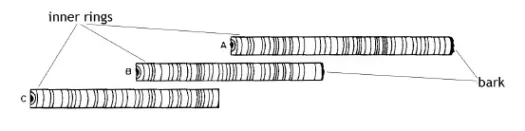 Carbon-14 dating is based on the simple idea that all living things are built based on the carbon atom. And, some of these carbon atoms that a living thing takes in while alive are radioactive carbon-14 atoms. These atoms have a half-life of around 5,730 years. Of course, when something dies, it stops taking in carbon-14. So, the original amount of carbon-14 starts to decay over time. So, all one has to do to find out when the remains of a living thing were actually alive is to measure the amount of carbon-14 in the remains and compare that amount to the amount of carbon-14 in the atmosphere. It all seems very simple and straightforward until one considers that the amount of carbon-14 in the atmosphere doesn’t stay the same over time – especially when considering something of worldwide catastrophic proportions like the Noachian Flood that buried huge amounts of carbon from living things, removing it from the biosphere of the Earth (Link).

That’s right. The ratio of atmospheric 14C to 12C doesn’t stay the same over time, but changes. Also, there are regional variations in the ratio that must be considered. This is why carbon-14 dating isn’t an entirely independent dating method, but requires calibration against other dating methods – like various historically-derived events and tree-ring dating for instance (Link). Of course, tree ring dating is, in turn, calibrated by other dating techniques, primarily carbon-14 dating – which is just a bit circular. Also, attempts to use amino acid racemization rates as a dating method, with efforts to help to calibrate radiocarbon dating, have failed. AAR dating methods have themselves also turned out to require calibration by radiocarbon dating (Link).
 What’s also particularly problematic about carbon-14 dating is that it strongly favors the literal creation week perspective, not the Darwinian perspective. Along with flexible soft tissues and sequencable proteins, and even fragments of DNA, many large dinosaur bones also contain quite a bit of 14C within their preserved soft tissues (Link). Given that 14C would be undetectable beyond 80,000 years or so, the presence of significant quantities of 14C within their remains, without any reasonable evidence of “contamination”, speaks very strongly in favor of the Biblical account of a literal Creation Week within recent history.
Dinosaur Soft Tissues are also a Clock:
 In addition, dinosaur soft tissues (which contain sequencable dinosaur proteins and even fragments of original dinosaur DNA) are themselves a type of “clock” that measures the passage of time. Soft tissues, proteins, and DNA within living things start to decay relatively rapidly upon death. In less than a 100k years, all such traces would be wiped out at ambient temperatures, based on kinetic chemistry alone (Link). Increasing temperatures vibrate atoms and molecules more and more rapidly, leading to more and more rapid decay based on heat alone. So, what is the best explanation as to how they could possibly survive many tens of millions of years?
ScienceDirect published a relevant article: A chemical framework for the preservation of fossil vertebrate cells and soft tissues.
The proposed mechanisms are:
Indeed, two mechanisms [Collins et al., 1998] [Schweitzer et al., 2014] [Wiemann et al., 2018] [Boatman et al., 2019] have been proposed to explain reports of soft tissues and biomolecules within ancient vertebrates. Both result in the intra- and intermolecular crosslinking and chemical transformation of reactant biomolecules, a process referred to as *in-situ* polymerization.
 There are multiple problems with these commonly proposed mechanisms.
The first problem is that crosslinking proteins (the “Fenton Reaction”) and polymerization only improve protein survival to a relatively small degree. Even proteins completely fixed with the use of formaldehyde still break down relatively rapidly under ambient temperatures. Significant DNA degradation within formalin-fixed tissues (up to 53% decrease in quantity) is observed after 4–6 years of storage. Significant protein reductions in immuno-intensity are often observed starting from 6 to 36 months. Specific markers, such as PD-L1, show significantly decreased staining after 3 years. Higher storage temperatures accelerate decay. Mary Schweitzer’s experiments only took place over two years. Her experiments do not explain how proteins can resist kinetic decay over tens of thousands, much less millions of years.
 Heat, by itself, causes the protein molecules to vibrate and fall apart relatively quickly (well less than a million years for the average expected temperatures affecting dinosaur remains). And, this is just heat. Dinosaur remains are also known to have been irradiated by radioactive materials that they absorbed (uranium, radium, or thorium from surrounding groundwater and sediment). Another problem is that many of these dinosaur proteins lack evidence of such crosslinking (described by microbiologist Kevin Anderson). Fenton reactions leave chemical signatures in that they change the chemical state of various amino acids. These telltale chemical signatures just aren’t present in dinosaur proteins. Also, Fenton reactions, like formalin fixation, make soft tissues hard, not flexible and elastic. The dinosaur soft tissues maintain their softness and flexibility. Further, there is evidence for the double-stranded structure of DNA in some of these dinosaur remains, yet the Fenton reaction destroys, rather than preserves, this double-stranded structure. Another problem is that some of the dinosaur soft tissue remains were not associated with hemoglobin (and its iron) at all (as in the collagen within a Triceratops horn).
In short, all of these explanations came after the discovery of dinosaur soft tissues as an attempt to explain away what was previously thought to be scientifically impossible due to well-known and well-demonstrated rates of protein and DNA decay at various temperatures. These ad hoc explanations really don’t solve the problem because they are simply not adequate.
They also don’t explain why so much radiocarbon is present within these dinosaur soft tissues, which shouldn’t be there after just 100k years, and they don’t explain the problem of detrimental mutation rates that would have wiped out the dinosaurs, reptiles in general, birds, and mammals all within well less than a million years.
DNA Detrimental Mutation Rates (also a Clock):
 Another reality of living things that many haven’t considered is that the gene pools of all complex organisms that reproduce sexually (all humans, apes, mammals, reptiles, birds, etc.) add more and more detrimental mutations in each generation, without being eliminated by natural selection. These organisms simply do not reproduce fast enough for natural selection to keep up with the very high detrimental mutation rate that affects all of their gene pools. That means, of course, that everything is evolving downhill, not uphill. We are all headed for eventual extinction and could not have existed in the past beyond even a million years (Link).
This problem, by itself, powerfully undermines NeoDarwinian evolution and the concept of “Deep Time” for living things on this planet that reproduce sexually. Yet, this problem is right in line with the Biblical description of the deterioration of humans and animals over time, not the improvement.
Two Coordinated Mutations Require > 100 Million Years:
 In fact, as highlighted in the third discussion below, theoretical statistical research on how long it would take to realize a novel function that required just two coordinated genetic point mutations (non-beneficial unless both mutations were realized within an organism) shows that this would require over 100 million years in a human population of 8 billion (Link– later amended to 216 million years). This is because the odds of just two coordinated mutations just coming along at random chance are 1 in ten million billion (1016). This, of course, means that statistically, humans could not have evolved from apes. The required functional genetic gap distances for the millions of required genetic changes would simply have been too hard to cross in what anyone would consider to be a reasonable amount of time.
Waiting for two mutations: with applications to regulatory sequence evolution and the limits of Darwinian evolution. Genetics. 2008 Nov;180(3):1501-9. (Link)
 This paper was, ironically, written in an effort to discredit Michael Behe and his statistical arguments against the evolution of complex biomachines with a minimum required number of uniquely interacting parts.
They wrote that one of their aims was to “expose flaws in some of Michael Behe’s arguments concerning mathematical limits to Darwinian evolution.”
Behe’s response to Durrett and Schmidt is also interesting: Link, Link
Texas Sharpshooter Fallacy:
 The best counterargument to the coordinated mutation problem is known as the Texas Sharpshooter Fallacy (Link). Lawrence Moran (2016) presented a particularly interesting problem regarding chloroquine resistance in malaria organisms (Plasmodium falciparum) in relatively short order (Link). At that time, it was thought that at least two separate mutations were required to achieve a selectable level of chloroquine resistance, where the initial mutation(s) were neutral with respect to function. Now, it is known that a selectable level of chloroquine resistance can be achieved with just a single point mutation (in different locations).
Chloroquine (CQ) resistance in Plasmodium falciparum malaria can be initiated by a single point mutation, specifically the K76T substitution (lysine to threonine at position 76) in the pfcrt gene. (Link)
The critical mutation conferring the first level of chloroquine resistance is found in aat1, a putative aminoacid transporter. (Link)
Chloroquine resistance in Plasmodium falciparum is a complex, polygenic trait primarily driven by multiple mutations (typically 4–10) in the pfcrt (Plasmodium falciparum chloroquine resistance transporter) gene. While a single point mutation can initiate low-level transport activity, full resistance requires a specific, multi-step evolutionary pathway. (Link)
 Of course, once even low-level beneficial functional activity is realized, further stepwise improvements based on individual point mutations will happen rapidly under heavy selection pressure.
So, even given that a at least two mutations are required to acheive a seletable level of functionality, in the relatively large population of malarial organisms on the planet (much larger than the number of humans on the planet – likely in the trillions or quadrillions, as a single infected person can host billions of parasites), the first mutation is likely already present in a number of the individual organisms in the population. That means, of course, that the realization of the second necessary mutation could occur in relatively short order, particularly given the rapid generation time (24-72 hours).
 In short, the argument is that there are many different possible targets in sequence space that are potentially beneficial. In other words, hitting the same bullet hole isn’t so insurmountable if there are a great many bullet holes already in the target. Therefore, even though a lot of time may be required to hit one particular target, the odds that at least one target, among a great many options, will be hit in a short amount of time are actually very good. And, this is true at very low levels of functional complexity. However, with each linear increase in the minimum size and/or specificity required at higher and higher levels of functional complexity, the ratio of non-beneficial to potentially beneficial targets within sequence space increases exponentially – and the average time to success as well (Link, Link). The evolution of chloroquine resistance in malaria is not a good example here since a selectable level of functionality is based on only a single point mutation.
 Compare this to the gap distances in sequence space comprised of numerous specific mutational changes between each of the proposed steppingstones along the evolutionary pathway for complex multiprotein systems like the flagellar motility system. It is for this very reason that no such evolutionary success has ever been demonstrated in any wild population or under laboratory conditions, nor has an evolutionary pathway even been proposed that could be reasonably traversed in what anyone would consider to be a reasonable amount of time (Link).

Ancient Archeological Sites:
 “According to National Geographic (subscription required), archeologists have continued to explore the “tell” upon which the biblical Jericho is assumed to have stood, and are now down to the site’s first fortifications of human settlement, which date to 10,000 BCE. This parallels the recent archeological find of the Göbekli Tepe site in southeastern Turkey that dates to 11,000+ years ago. This is surpassed by the recently-discovered Rimrock Draw Rockshelter in Oregon, which dates to 18,000 years ago and shows that the human occupants consumed now extinct species of giant land mammals.”
Again, all of these sites are based on radiocarbon dating techniques, which assume a constant atmospheric ratio of 14C to 12C (see above). None of these “dates” is written in stone, so to speak, with credibility that undermines the Biblical account given to us by God Himself, who was actually there when it all happened.
Ancient Cultures with similar Creation dates:
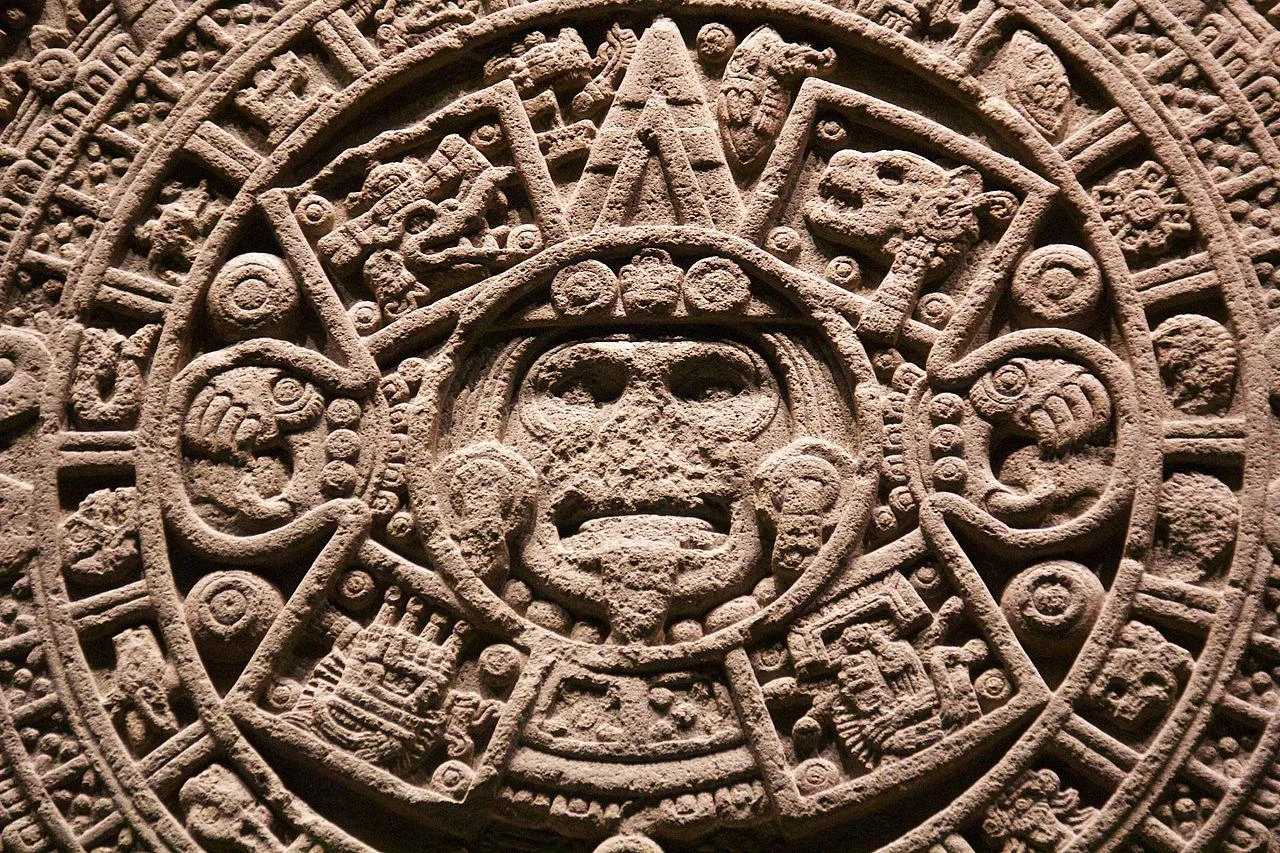 As an interesting aside, note that many ancient cultures also have a similar date for creation of less than 10k years. The Anglo-Saxons, for instance, start history 5,200 years before Christ (according to the Laud and Parker Chronicles). The Nennius’s record of ancient British history has 5,228 years from creation to Christ, the Irish chronology has a date of about 4000 B.C. for creation, the Egyptians 6081 B.C., the Chinese 6157 B.C., the Samarians 4427 B.C., and the Mayan calendar began September 6, 3114 B.C., with a “Great Flood” occurring around this time as well. Isn’t it interesting that all of these histories are much more in line with the Biblical account and SDA claims compared to the claims of theistic evolutionists? What? Nothing recorded until just a few thousand years ago? Despite modern humans existing for hundreds of thousands of years?
Flood Myths of the Americas:
Separated from any influence by Jewish culture or the Flood stories of Mesopotamia, the Orient, or Europe, the Flood Myths of the Americas are very interesting in that they are essentially universal to all ancient peoples in the Americas and are surprisingly similar to the Biblical account of Noah’s Flood in many respects.
 The Toltecs had historical paintings and traditions that told of an ancient flood, which they said occurred 1716 years after the creation of the world (this is within 100 years of the biblical timeframe). Only a few escaped the flood, floating inside a “toplipetlacali,” an enclosed vessel. After the flood, they said that “men multiplied and made a very high zacuali … which means the highest tower, at which they sought to find shelter when the Second World would be destroyed. In time, the languages were changed and, not understanding each other, the people went to different parts of the world.” They said they arrived in Mexico “520 years after the flood had passed, which are five ages.”
Fernando de Alva Ixtlilxochitl, Primera Relación de la Historia de los Tultecas, in Antiquities of Mexico, ed. Lord Kingsborough, vol. ix (London: Henry G. Bohn, 1848), pp. 321-322. Ixtlilxochitl, Relación Sucinta En Forma de Memorial de las Historias de Nueva España, Relación , in Antiquities of Mexico, vol. ix, p. 450.
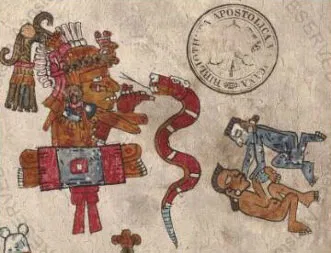 The Aztecs, too, have ancient paintings that depict the flood, showing one couple safely floating inside a hollow tree as the world was destroyed by water. In another ancient pictorial manuscript from Mexico (Codex Vaticanus 3733), we find the depiction of a woman talking to a serpent and two children behind the serpent, contending with each other. The similarity of this painting to Genesis is obvious, and it is confirmed by the literature and traditions from Mexico. As Humboldt explains, the woman is Cihuacohuatl, the “woman of our flesh,” and the “serpent woman.” She is considered the mother of the human race, and she is “always represented with a great serpent.” She is considered the mother of two twin children (they are shown in this exhibit). She is also considered to have “fallen from her first state of happiness and innocence.”
Alexander de Humboldt, Researches Concerning the Institutions & Monuments of the Ancient Inhabitants of America, trans. Helen Maria Williams, vol. 1 (London: Longman, 1814), pp. 195-196.
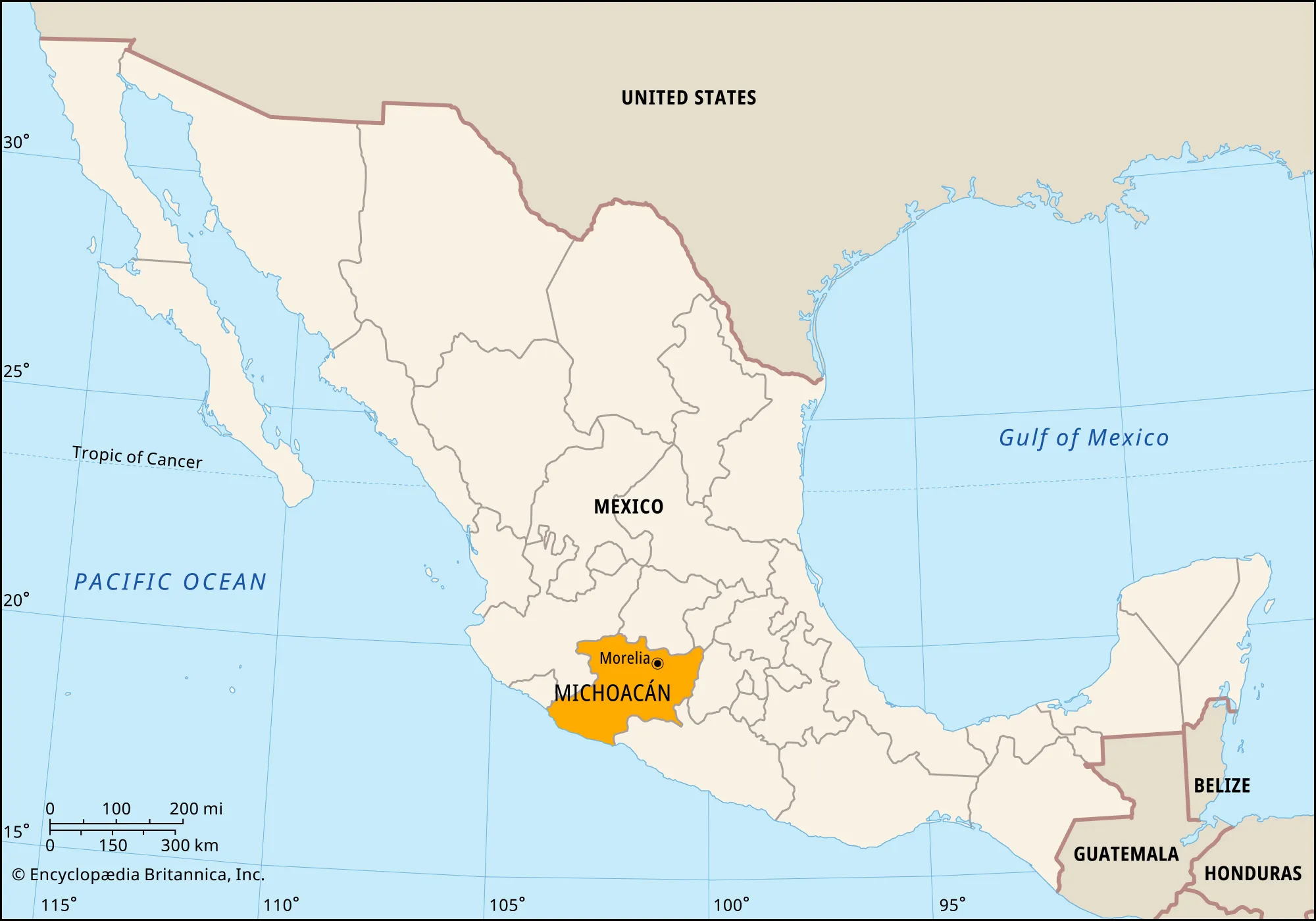 The Michoacáns told the first Spanish colonizers their account of the flood in which their Noah, whom they called Tezpi, “embarked in a spacious ‘acalli’ with his wife, his children, several animals, and grain, the preservation of which was of importance to mankind. When the great spirit, Tezcatlipoca, ordered the waters to withdraw, Tezpi sent out from his bark a vulture.” This bird did not return to him, finding many carcasses to eat from. Then, “Tezpi sent out other birds, one of which, the hummingbird alone, returned, holding in its beak a branch covered with leaves.” The man, seeing that fresh vegetation was growing on the earth again, left his vessel “near the mountain of Colhuacan.”
Alexander de Humboldt, Researches Concerning the Institutions & Monuments of the Ancient Inhabitants of America, trans. Helen Maria Williams, vol. 2 (London: Longman, 1814), p. 23. See also: Antonio de Herrera y Torsedillas, Historia General de los Hechos de los Castellanos, Década Tercera, Book 3 (Madrid: Royal Office of Nicolas Rodriguez, 1726), p. 94.
 According to the Lacandon, an isolated jungle tribe of southeastern Mexico, a god instructed his son-in-law “that he should build a boat, in which they should enclose one man and one woman of every lineage, and samples of all types of animals, and seeds of all trees and plants of the forest. … Then it began to rain without stopping. It was a deluge. … All mankind perished, except those who were in the boat.”
Didier Boremanse, “Ortogenesis en la Literatura Maya Lacandona,” Mesoamerica, vol. 10, no. 17 (Guatemala: 1989), pp. 70-71.
 The Cabécar seemingly have combined the memory of the Garden of Eden and the flood. They spoke of a magical tree, a woman who was bitten by a serpent, a test by a god named Sibu to see whether the people obeyed him, the flood, divine judgment, and the survival of a favored few on a giant raft. Sibu “saw that all the earth’s inhabitants behaved very badly, that they forgot and denied that he was the one who had created them.” So he sent the flood. “The majority of the people had died, having drowned in the punishment.” But others who “kept the commands” of Sibu were helped, and were enabled to build an enormous raft, by which they survived the flood and waited until the waters subsided.
Rodrigo Salazar, Las Leyendas del Duchi (San Jose: Departamento de Publicaciones del Ministerio de Educacion Publica, 1977). pp. 25-54.
 “There was a shaman who lived back when the world was inundated,” told the Ashaninkas of Peru. “One night, he had a dream in which he was warned of a coming flood, and that he should build a great raft with a house on it.” He gave his grandsons instructions to cut wood, make nails, and build the raft. “When the shaman saw that everything was finished, he saw that a tapir was coming to get on the raft. He saw all types of animals come as well.” He told his grandsons to store up foods on the raft. Some of his grandsons, who were making merry, scoffed and said, “Look at our grandfather. From where will this flood come that is going to fill the earth?” Then the old man said, “Do not call me a liar. Thus I was warned in a dream the other day. You yourselves have seen the animals come to the raft. You come also.” Soon, “a strong rain fell and began to fill the earth with water. … The raft continued floating higher and higher upon the waters.” After a long time and many difficulties, “when the earth had dried out from the flood, the children of the shaman dispersed in every direction. They also married among themselves, for there were no other women. So the people multiplied to the numbers which we have today. If it had not been for that shaman, we would not exist today.”
Ronald J. Anderson, Cuentos folkloricos de los Asheninca, vol. 1 (Lima, 2008), pp. 143-155.
See also: Link
The Orion Nebula:
 “Early astronomers thought they saw a dark hole in its middle which was interpreted by many early Adventists as the passageway from which Jesus would return to earth at the second coming, and through which the saints would travel on the return to the heavenly house of God. However, today the James Webb Space Telescope and the Hubble Space Telescope are recording thousands of amazing pictures of this region. They find no hole. Instead, the region is a congested, super-hot, explosive nuclear furnace forming countless new stars, exploding supernovas, and colliding stars and planets. Is it time for us to have meaningful conversations about the Orion Nebula?”
Ellen White describes an “open space” in “Orion” through which will one day come the “City of God” (Early Writings, p. 41). This was in line with the description of Joseph Bates regarding the Orion Nebula (The Opening Heavens, Pamphlet 1, p.6). Of course, the Orion Nebula is huge, making the term “congested” a rather relative term. Who are we to say that Jesus can’t come through that region? I dare say that He wouldn’t be worried by the “furnace” of Orion.
Also, there does appear to be an actual “open space” or “hole” in the “center” of the Orion Nebula:
In the center of the nebula is a dark patch. Normally, a dark patch such as this would indicate a dense cloud of cosmic dust, obscuring the stars and nebula behind it. However, in this image we can see that the patch remains strikingly dark, even when the APEX observations are included. Thanks to these APEX observations, combined with infrared observations from other telescopes, astronomers believe that the patch is in fact a hole or cavity in the nebula excavated by material flowing out of the star V380 Orionis. For once, it truly is a hole in the sky!
See also: Link
As an aside, evidence suggests that a black hole, estimated at 200 times the sun’s mass, likely resides within the Orion Nebula. Proposed in 2012 by an international team, this potential black hole is located within the Trapezium Cluster and could explain the high velocities of the young stars in that region (Link).
An Evil God and the Credibility of His Word:
 For Seventh-day Adventists in particular, the claims of theistic evolutionists undermine the credibility of both the Bible and Ellen White, and put God in a very bad light. The fact is that most world-class scholars of Hebrew, particularly secular scholars, agree that the author(s) of the Genesis account intended to convey a literal account of a literal creation week (Link). Such an understanding does increase the overall credibility of the Bible and of the rational basis for the Sabbath as a memorial of our Creation. For God to have created a Sabbath day of rest as a memorial to vast eons of evolutionary progress on this planet makes far less sense and also paints God as calling something “very good” that is actually full of evil, pain, and suffering for sentient creatures over vast spans of time – unrelated to “sin” or the “fall” of mankind. Such a view also paints God as being rather coy with us by not sharing with us the actual truth of our origins. If millions of years of life existing and evolving on this planet were a reality, it would have been relatively simple to say so in the Genesis account of origins, rather than to leave it to Darwin to explain. The official SDA position on origins paints God in a far better light – and also enjoys the weight of true empirical evidence.
I know that Pastor LeMert is not alone in these questions or thinking on this topic. However, for a Pastor who is employed by the Seventh-day Adventist Church, it is a form of theft, of robbery from his employer, to be promoting ideas as “true” that strike directly at the clearly stated “fundamental” goals and ideas of the SDA Church. After all, Pastor LeMert’s article strikes directly at what the Church stands for as a Fundamental part of the Gospel Message of Hope that we, as a church organization, are striving to share with the world. Sure, Pastor LeMert is now retired, so I guess he is free to say whatever he wants at this point. It’s just that he was preaching his theistic evolutionary ideas during his 41+ years of employment with the Church and is now actively undermining one of the key reasons for the very existence of the Seventh-day Adventist Church.
_________________
 Dr. Sean Pitman is a pathologist, with subspecialties in anatomic, clinical, and hematopathology, currently working in N. California.


