By Sean Pitman
 From a response to Pastor John Thomas Mclarty in an Atoday discussion blog by Cindy Tutsch entitled, “Who’s a Fundamentalist?”
 Pastor Mclarty wrote:
Cindy, You begin by defining fundamentalism in the context of 20th century American Protestant history and prove that Adventists, even staunchly conservative Adventists, disagree with a crucial element of that definition. However, you weaken your point by acknowledging this is only one definition of fundamentalism. You cite Hood, Hill and Williams who write:
“What distinguishes fundamentalism from other religious profiles is its particular approach toward understanding religion, which elevates the role of the sacred text to a position of supreme authority and subordinates all other potential sources of knowledge and meaning.”
It all depends upon the reason why a particular text, or a particular person, or even a particular idea is elevated to a position of authority. It has to do with establishing credibility. To quote Mrs. White in this regard:
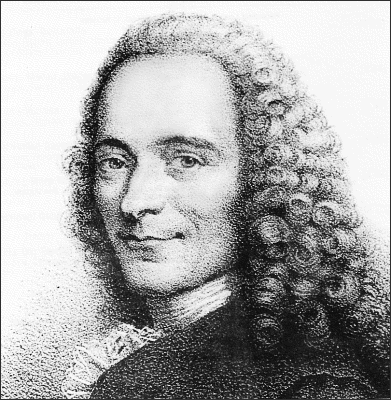
The infidel Voltaire once boastingly said: “I am weary of hearing people repeat that twelve men established the Christian religion. I will prove that one man may suffice to overthrow it.” Generations have passed since his death. Millions have joined in the war upon the Bible. But it is so far from being destroyed, that where there were a hundred in Voltaire’s time, there are now ten thousand, yes, a hundred thousand copies of the book of God. In the words of an early Reformer concerning the Christian church, “The Bible is an anvil that has worn out many hammers.” – Ellen White, GC p. 288
 Or, consider the thoughts of popular Christian apologist Ravi Zaccharias as he addresses this question:
If a pastor says, “All we need is the Bible,” what does he say to a man who says, “All I need is the Qu’ran”? It is a solipsistic method of arguing.
The pastor is saying, “All is need is my own point of reference and nothing more than that.” Even the gospel was verified by external references. The Bible is a book of history, a book of geography, not just a book of spiritual assertions.
The fact is the resurrection from the dead was the ultimate proof that in history – and in empirically verifiable means – the Word of God was made certain. Otherwise, the experience on the Mount of Transfiguration would have been good enough. But the apostle Peter says in 2 Peter 1:19: “We have the Word of the prophets made more certain… as to a light shining in a dark place.” He testified to the authority and person of Christ, and the resurrected person of Christ.
To believe, “All we need is the Bible and nothing more,” is what monks believed in medieval times, and they resorted to monasteries. We all know the end of that story. This argument may be good enough for those who are convinced the Bible is authority. The Bible, however, is not authoritative in culture or in a world of counter-perspectives. To say that it is authoritative in these situations is to deny both how the Bible defends itself and how our young people need to defend the Bible’s sufficiency.
An interview with Ravi Zacharias by Richard L. Schoonover, associate editor of Enrichment Journal, 2009
The Christian Gospel with its message of hope is written to appeal to the intelligent, thoughtful, candid mind. It is not an appeal to blind faith, devoid of any empirical basis or evidence, at all. It is an appeal that itself invokes physical empirical evidences as the basis for its own authenticity and credibility.
For example, consider the story of Jesus healing the paralytic. In this story Jesus asks the question, “Which is easier: to say, ‘Your sins are forgiven,’ or to say, ‘Get up and walk’?” Matthew 9:5. Let me ask you, what would have happen to Jesus’ metaphysical claim to be able to forgive sins if the paralyzed man had not been healed when Jesus said, “Get up and walk”? Obviously, Jesus’ claim to be able to forgive sins would have taken a huge blow. His credibility would have been shot.
The same thing is true when it comes to a rational belief in the Christian Gospel – or even the Bible itself as anything more than a collection of moral fables. The credibility of such a belief is based, or at least can be based, on the established credibility of those biblical statements that are subject to empirical evaluational, testing, and at least the potential of falsification. And, as in the case of Jesus and the paralytic, if the falsifiable claims of the Bible are in fact falsified, the credibility of the Bible, with regard to those metaphysical claims that are not directly testable, declines as well…
For this reason, it is a mistake to argue that all those who believe in the Bible as the inspired Word of God, who take the intended literal meaning of the Genesis authors at face value, or who actually believe that the biblical stories of fantastic miracles really did happen as described, believe such things based on blind faith in the supreme authority of the Bible alone – without any outside empirical evidence or basis for a truly rational faith in such fantastic things.
While such may be called “fundamentalists” according to certain definitions of this term, these fundamentalists need not be any more irrational in their beliefs compared to high-level scientists who hold certain laws of nature to be fundamentally reliable, with great predictive value regarding the as yet unseen future, due to their extreme credibility in past experience under close empirical evaluation and testing.
On August 7th, 2010, in response to this line of reasoning dhok wrote:
Well, just how do we set up an experiment or research paradigm wherein we can at least potentially falsify the story of the resurrection of Jesus and his healing of the paralytic? And if we cannot set up such a test of their credibility, then how is it that those stories can be established as being just as deserving of our belief (from a scientific perspective) as the reliable laws of nature that high level scientists hold in such high esteem?
You miss the point. The point of the story of Jesus and the paralytic (and Ravi’s basic argument) is that, according to the biblical authors, Jesus Himself appealed to empirical evidence to support His metaphysical claims. In other words, the biblical authors had a sense of the need for an empirical basis to establish the credibility of metaphysical claims – which is a very interesting rational, even scientific, concept.
In this line there are many aspects of the Bible, as Ravi points out, that are open to testing and potential falsification – to include its historical statements and statements about natural phenomena and even the human condition. Many, especially among mainstream scientists, consider that many elements of the claims of the Bible have been clearly falsified. For example, the claims of the biblical authors regarding a recent literal creation week and a worldwide Noachian flood are considered, by the vast majority of mainstream scientists, to have been overwhelmingly falsified by the physical evidence.
What this means, of course, is that there are in fact key elements in the Bible that are indeed open to comparison with external physical reality, to testing in other words, and therefore to the potential for falsification – the basis of the science of establishing credibility in the reliability or authority of a witness. And, as these testable elements are in fact falsified to the satisfaction of one’s own mind, the credibility of those elements of the biblical claims that are not directly subject to testing or potential falsification decline to the same degree – as would have been the case in Jesus’ day if He had not been able to heal the paralytic. Logically, the credibility of His claim to be able to forgive sins would have taken a huge hit – by His own admission.
In short, the biblical authors do not argue for blind faith as the basis behind their own beliefs, but for a rational evidence-based faith that was built upon solid empirical evidence. They claim that they have not followed cunningly devised fables (2 Peter 1:16), but have believed what they personally saw, heard, and tested. Elsewhere the biblical authors quote God as asking us to “prove” or even “taste” and see if what He says is or is not true. (Malachi 3:10 and Psalms 34:8).
The same thing is, or at least can, in theory at least, be true today. One’s “faith” can be the same as one’s “science” – and visa versa. In fact, there is always a component of faith even in science. Science is all about taking leaps of faith across gaps in knowledge that are not and cannot be known with absolute perfection. Science is about dealing with limited information as best as one can. If the information were not limited, science would no longer be needed. It is only when information is limited, and one must take a leap of faith of at least some distance, that science becomes useful in helping one to take the best or most useful leap of faith possible…
www.DetectingDesign.com