An interesting backstory behind the long history of the development of the mRNA vaccines against COVID-19 was recently published by National Geographic (Jillian Kramer, December 31, 2020) – where multiple puzzle pieces seemed to just fall into place at just the right time. This story is particularly interesting because of its seemingly providential nature – the turns and twists of which have not gone unnoticed and have even been remembered in Biblical terms, with those involved citing a famous line from the Book of Ester. The highlights are as follows:
Table of Contents
Video Summary:
Background Story:
Barney Graham doesn’t quite know how to answer when asked how it feels to have decades’ worth of work contribute to rapidly developed vaccines that could save hundreds of thousands of lives amid a harrowing global pandemic.
“That’s not the way we usually think about it,” he says. “I don’t think you really think that much about your feelings until you get to certain milestones.”
But the question—posed using the phrase “such a time as this”—makes Graham hearken back to the biblical tale of Esther, a queen who was made a royal for “such a time as this.”
“I have kind of felt like my whole career has been lining up for ‘such a time as this,’” Graham says
 The development of the modern mRNA vaccines against the COVID-19 virus really started some twelve years ago following a fortuitous accidental discovery. Early attempts at creating a vaccine against the highly contagious and sometimes fatal RNA virus known as the respiratory syncytial virus or RSV (with some key similarities to the Sars-COV-2 virus) had not only failed, they had made things worse. Clinical trials of an RSV vaccine in 1966 had actually enhanced the illness caused by the RSV virus and even resulted in the deaths of two infants. Jason McLellan, a structural virologist at the University of Texas at Austin, had been personally working with the RSV virus for over 20 years and had long wondered why the initial attempts at an RSV vaccine had failed so miserably?
 In what they now refer to as a “happy accident” McLellan and Graham ended up working in the same building with labs right across from each other “within earshot”. So, they began working on the RSV virus together. The most promising protein that many had previously tried to target with vaccines, the “F protein” was able to transform itself into different shapes “like a Transformer toy”, and was also “unstable”. This instability and transformability of the F-protein blocked all prior attempts to produce a successful vaccine against it that would educate the human immune system to consistently recognize it. Beyond this, McLellan and Graham didn’t even know what the F-protein looked like. So, as a first step in studying it, McLellan used what is known as x-ray crystallography to determine the structure of this protein – which looked like a “lollipop” to some, but like a “Nerf football” to McLellan. After examining it at the atomic level, McLellan then found a way to stabilize it and block its ability to transform itself into different shapes. Then, Graham took the stabilized F-protein and vaccinated lab animals with it – and, miracle of miracles, it had 50 times the neutralizing power against RSV compared to anything that had been tried before. They also discovered that the other transformed shapes of the F-protein were able to bypass the immune system’s defenses.
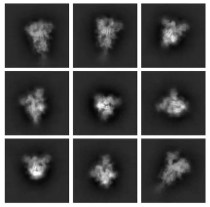 For this, they won “runner-up” recognition in Science’s 2013 Breakthrough of the Year.
Then, five years ago, one of their lab workers came down with a type of coronavirus known as HKU1 – which caused mild cold-type symptoms. Using similar techniques, they determined the structure of the “spike protein” of this virus and how to stabilize it. They called the stabilized spike protein the 2P mutated form – because they used two rigid proline amino acids to stabilize the protein. And, animal studies using a vaccine based on the 2P spike protein were successful at creating immunity to various coronaviruses – including the MERS virus.
 Then, on January 6th, 2020, when the news of the beginning of the Sars-COV-2 pandemic from China had already hit the world, Graham and McLellan got the viral sequence for this new coronavirus. In about two weeks they knew the structure of the virus and were able to stabilize its spike protein using the 2P mutations that they had previously discovered. And, testing in mice showed a good immune response to the 2P protein.
“When we got the first results from the mice, and they had a great antibody response, it was so gratifying,” Corbett says. By March 4, the U.S. Food and Drug Administration had greenlit the Moderna vaccine for human trials.
Further tests would be needed to judge how much the 2P mutation contributes to the overall efficacies of the frontrunner vaccines. Phil Dormitzer, Pfizer’s chief scientific officer and vice president of viral vaccines, says it’s “absolutely clear” that stabilizing prefusion proteins led to remarkable advances with potential RSV vaccines. “I’m very glad we picked those mutations to move forward,” he says, referring to the Pfizer-BioNTech COVID-19 vaccine.
____________
 Dr. Sean Pitman is a pathologist, with subspecialties in anatomic, clinical, and hematopathology, currently working in N. California.